
DOTS 2026 (Framework to improve pain management for people living with dementia)
A framework to improve pain management with people living with dementia.
A framework to improve pain management with people living with dementia.
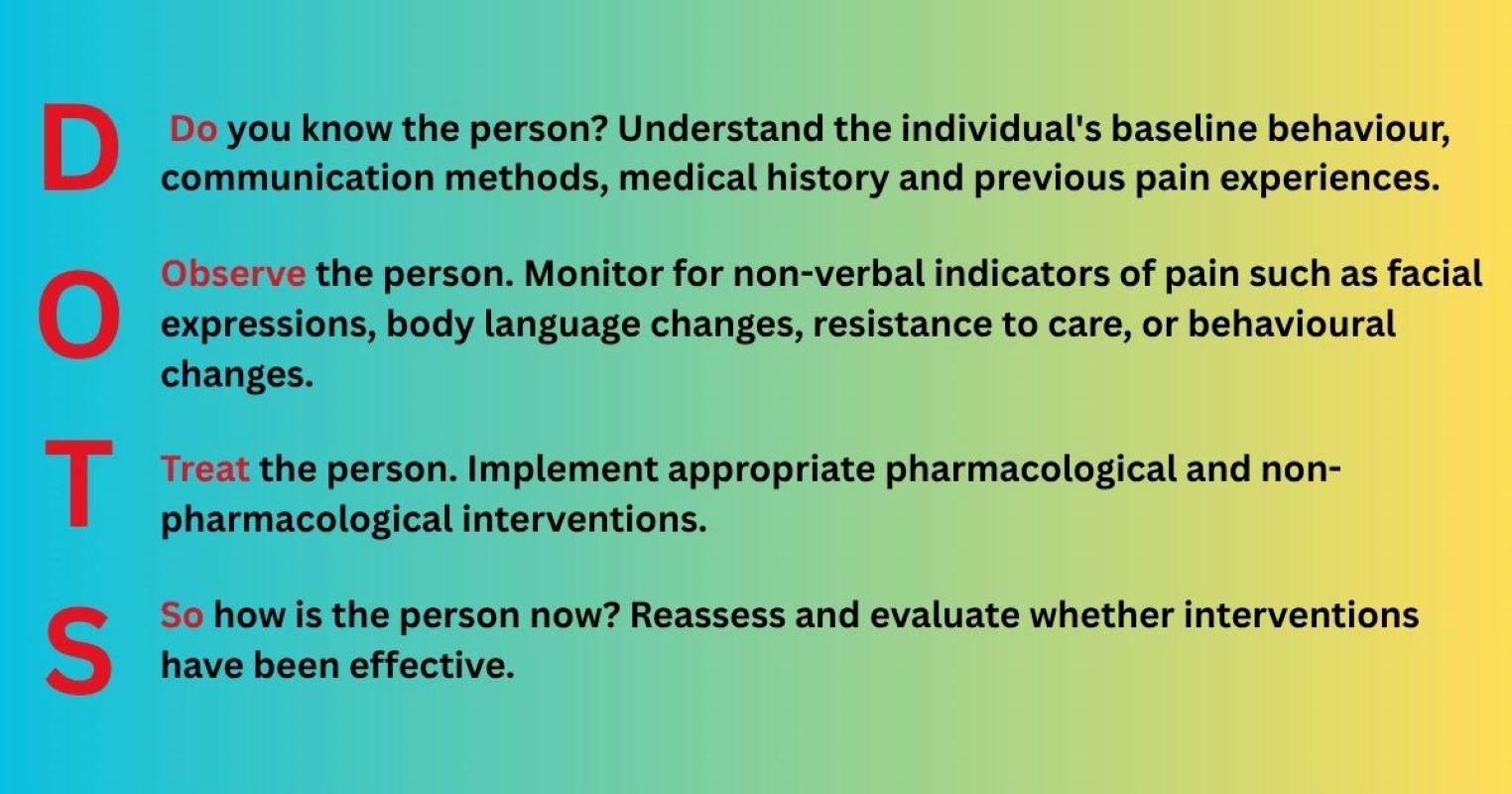
DOTS
Overall aim of the project is to improve pain management with people living with dementia.
- Our SMART aim is a 10% Reduction in numerical score on the Abbey pain scale for People living with dementia within six weeks through the implementation of DOTS.
The cohort identified pain management as a significant challenge for people living with dementia. Evidence presented within the project highlighted that many people with dementia living in UK care homes experience unmanaged pain. Staff reported difficulties recognising pain due to communication barriers associated with cognitive decline, loss of expressive language, and the risk of interpreting pain-related behaviours as behavioural distress rather than indicators of discomfort. This Quality Improvement initiative sought to address these challenges through the introduction of the DOTS approach to pain assessment and management
Residents, families, staff
DOTS
Baseline data were collected over a two-week period from five residents. The average Abbey Pain Scale score was 10.2, indicating a moderate level of pain. The project identified several gaps in practice:
The project introduced the DOTS Framework, a structured approach to pain recognition and management:
D – Do you know the person? Understand the individual's baseline behaviour, communication methods, medical history and previous pain experiences.
O – Observe the person. Monitor for non-verbal indicators of pain such as facial expressions, body language changes, resistance to care, or behavioural changes.
T – Treat the person. Implement appropriate pharmacological and non-pharmacological interventions.
S – So how is the person now? Reassess and evaluate whether interventions have been effective.
The intervention was implemented using a Plan-Do-Study-Act (PDSA) methodology:
A process map was developed to standardise the assessment and management of pain, supporting staff to consistently identify and respond to potential indicators of discomfort. A driver diagram was also created to identify the key factors influencing effective pain management and to guide implementation activities.
Resident Abbey Pain Scale scores were monitored weekly following implementation of the DOTS framework.
The temporary increase in Week 5 was attributed to staffing pressures and sickness absence, with staff reporting that DOTS had not been consistently applied. Following a refresher session, scores improved further by Week 6. Overall, the project demonstrated a reduction in average pain scores from 10.2 to 8.0 during the six-week period

Residents experienced improved pain management, contributing to a better quality of life and a reduction in pain-related distress within the care setting.
Families reported increased confidence in how pain was being managed and observed more positive interactions with residents during visits. Further evaluation of family experiences was planned as the project progressed
Staff became more confident in recognising and managing pain in people living with dementia. The project also suggested the potential for reduced time spent managing distress behaviours, although further study was required to confirm this benefit.
The project team proposed that, if successful, the DOTS framework would be embedded within the current care homes and subsequently rolled out to other services across the organisations.
A micro eLearning resource created by Dr Deirdre Harkin was used by these participants and is available to provide ongoing staff education and reinforce the principles of the DOTS framework. This is available on e-learning platform ‘Learn HSCNI’.